

Arduino unveils AI-focused single-board computer powered by Ubuntu
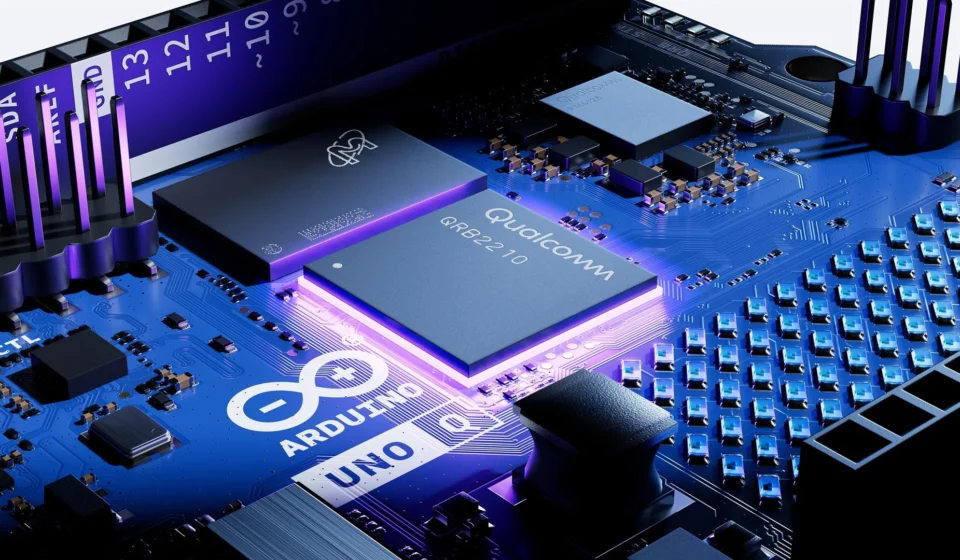
Arduino has introduced a new AI-focused single-board computer called VENTUNO Q, developed by Arduino in collaboration with Qualcomm. The device comes with Ubuntu pre-installed and is designed primarily for demanding edge-AI scenarios rather than hobbyist projects.
Unlike boards aimed at general DIY use, the VENTUNO Q targets professional environments such as robotics, industrial automation, and computer-vision systems where on-device AI processing is required.
At the core of the board is the Dragonwing IQ‑8275 chip from Qualcomm’s Dragonwing lineup. This processor integrates a CPU, GPU, and NPU capable of delivering up to 40 TOPS of AI performance, enabling local execution of tasks like large language models, visual language models, and advanced vision workloads.
Hardware specifications include 16GB of LPDDR5 memory, which is twice the RAM offered by the NVIDIA Jetson Orin Nano Super, along with 64GB of built-in eMMC storage. For users who need additional space, the board also includes an M.2 slot for NVMe drives. Connectivity options feature Wi-Fi 6, Bluetooth 5.3, and 2.5-gigabit Ethernet, making it suitable for high-performance edge deployments.
On the software side, development revolves around Arduino App Lab, an integrated environment designed to simplify AI experimentation and deployment. Through App Lab, developers can work with Arduino sketches, write Python code, and integrate ready-to-use AI models from a single interface. The idea is to allow users to go from unboxing the hardware to running AI inference with minimal setup.
Developers who prefer a more traditional Linux workflow are not limited to the provided tools. Standard utilities and frameworks such as Visual Studio Code, Docker, and common Python libraries can be used directly on the system, since the App Lab environment is optional.
Hardware compatibility is another focus. The board supports Arduino UNO shields, Raspberry Pi HAT add-on boards, and Arduino’s Modulino nodes via a standard 40-pin GPIO header, giving developers flexibility when integrating sensors and peripherals.
While Ubuntu is widely recognized for its desktop edition, it also plays a major role in embedded systems and large-scale deployments. Canonical, the company behind Ubuntu, has been steadily positioning the operating system as a key platform for edge computing, robotics, and IoT development.
In 2025, Canonical and Qualcomm expanded their collaboration by releasing certified Ubuntu 24.04 LTS images optimized for Dragonwing IoT hardware. Support for the VENTUNO Q continues that effort, giving industrial developers a stable Linux base for AI-powered applications.
According to Cindy Goldberg, Vice President of Silicon Alliances at Canonical, providing Ubuntu for the VENTUNO Q helps ensure that early prototypes can eventually scale into secure industrial products backed by 10 years of security updates.
Meanwhile, Fabio Violante, Vice President and General Manager at Arduino, highlighted that pairing the board’s hardware with Ubuntu makes it possible to transform AI-generated insights into real-world actions almost instantly.
Although the board is not yet available for purchase and pricing has not been announced, it is currently being showcased at Embedded World 2026 in Germany, taking place from March 10 to March 12. Interested developers can sign up on the Arduino website to receive notifications when the VENTUNO Q becomes available.